


Introduction of the cultivation of Stevia
Greece, Karditsa

Region
Karditsa is located in Central Greece and is a half mountain-half plain area with 2% of the national territory and 3% of the country’s total agricultural land. Arable land occupies 90% of the agricultural land, with cotton crops covering 45% of the cultivated area and 66% of the irrigated land. Farms are small- and medium-sized.
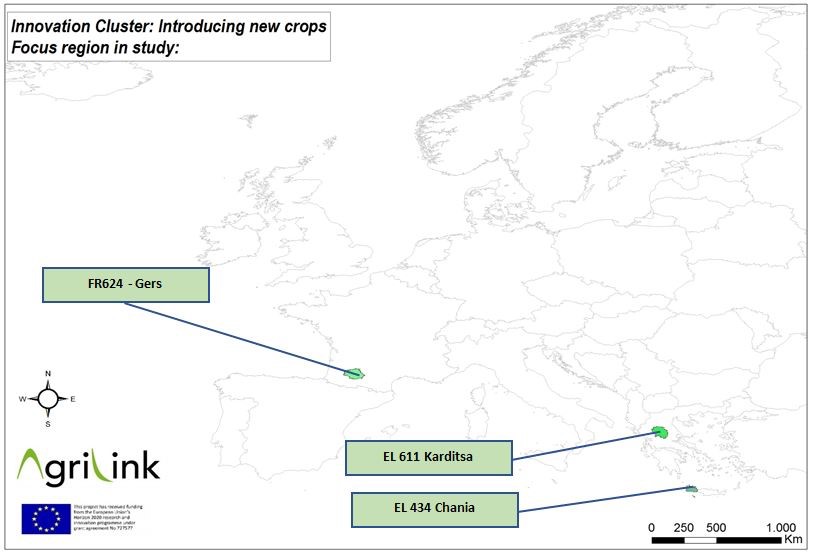
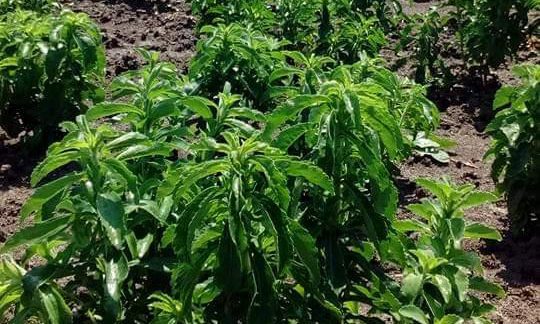
Stevia was introduced in Karditsa to diversify production and to help alleviate the severe competition between traditional crop farmers, which was worsened by the financial crisis in 2010. The adoption of innovations associated with the production and processing of Stevia was first examined in the Horizon 2020 AgriSpin project (https://agrispin.eu/).
Study focus
This AgriLink case study focused on the flow of (scientific) knowledge from researchers to farmers, as well between the Stevia cooperative farmers. Of particular interest was the farmer’s micro-AKIS involved in assessing and adopting the cultivation of Stevia. The farm advisory system in Karditsa is characterised by the absence of publicly-funded advisors, the collapse of the traditional cooperatives and the emergence of input suppliers as the main source of advice (‘integrated’ with the sale inputs). In the case of Stevia, other key actors are researchers. They act primarily on their own initiative and at the invitation of the members of the Stevia cooperative.
Farmers initially became aware of Stevia through dissemination activities organised by public (research and education) institutes and later by local groups. During the adoption of Stevia cultivation, farmers mainly base their decisions on information and knowledge they acquire from researchers, plus discussions with members of the Stevia cooperative. Families and friends may also be consulted. After cultivation is started, farmers support each other, disseminating their accumulated knowledge and experience, especially through pilot fields.
The Stevia cooperative addresses problems with cultivation through the organisation of field experiments and the dissemination of results and knowledge from these. This also helps to strengthen collegial trust among the members.
The full report (in English) is here – Part 1 and Part 2.
Partner and responsible person contact

Agricultural University of Athens
Alex Koutsouris, koutsouris@aua.gr
Lessons learned
- Farmers have the ability to innovate even in the absence of an advisory organisation supporting their efforts. Farmers that adopted the cultivation of Stevia also took on an advisory role and restructured their micro-AKIS environment by organising learning by doing activities and building on teamwork and collegiality. As such, they proved themselves as valuable sources of knowledge for each other. The Stevia growers built their resilience and overcame many other challenges by remaining open to collaboration with other crops.
- Despite its success, the Stevia cooperative became ‘trapped’ by the tendency to limit themselves to interactions amongst the members. They failed to create the space necessary to develop long-term collaboration with knowledgeable external actors. Consequently, the cooperative missed the opportunity to leave its mark in the regional advisory landscape.