


The role of advisory services in farmers’ decision-making regarding cultivation of Tagetes (French marigolds) for nematode control in the sandy soils of the Netherlands
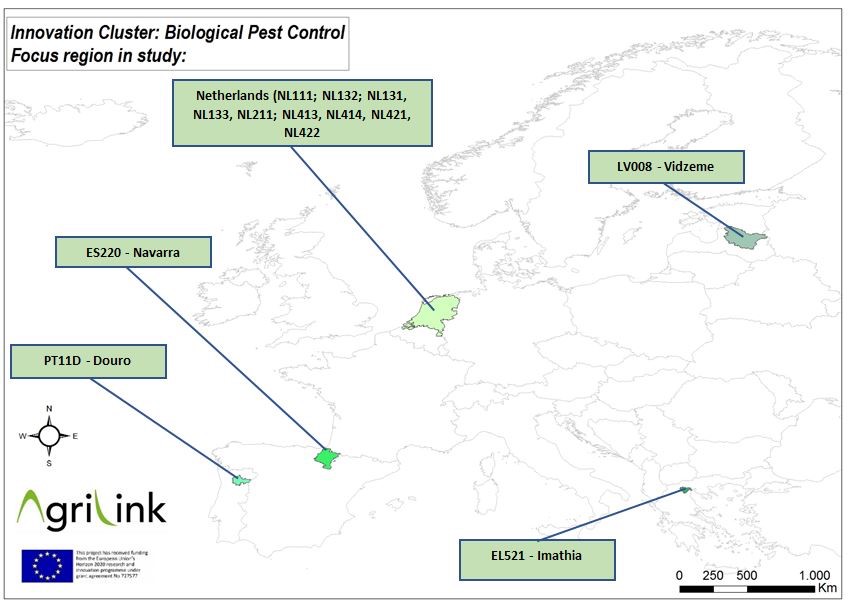
Noord-Holland and Limburg, the Netherlands

Region
Noord-Holland and Limburg are two arable and vegetable cropping regions of The Netherlands. The province of Noord-Holland is in the north-east of the country and Limburg is in the south-east. Both regions are known a) for the cultivation of mainly high value crops such as potatoes, strawberries, fruits and flower bulbs, and; b) for the significant nematode problem (and associated economic losses) when growing these crops on sandy soils.
Study focus
This study focused on the flow of knowledge from researchers and farm advisors to farmers regarding the cultivation of French marigolds (Tagetes patula) for the control of nematodes. This practice is still relatively innovative and widely adopted in some localities, but less so in others.
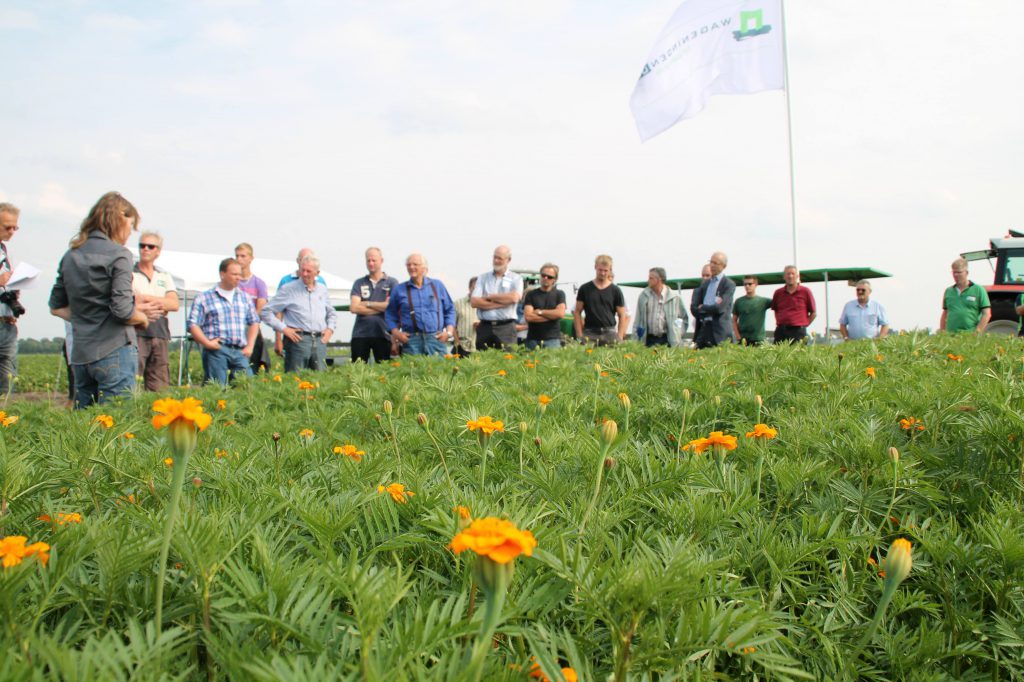
The reasons why farmers have implemented the innovation was analyzed and it was explored from which sources they received the necessary knowledge to make a well-informed decision.
The main reason that farmers started to cultivate Tagetes is that chemical controls are increasingly difficult to use because of the increasingly strict rules regulating pesticide use on farms. Advisors and researchers are therefore committed to make farmers aware of non-chemical alternatives and to assist them with their implementation. Research on the use of Tagetes for nematode control is mainly undertaken on experimental farms in the two provinces and these farms were clearly observed as hotspots for uptake of the innovation.
Advisors use research data to make farmers aware of the problem and the solution. Once they are aware, farmers start looking for technical advice about how the Tagetes can be best grown to control nematodes in their crops. For example, issues such as weed control in the Tagetes are important practical considerations for farmers. Overall, the use of Tagetes cultivation for nematode control is increasingly effective, widely adopted and found to have other benefits for farmers, such as improved soil quality.
The full report (in English) is here:
Partner and contact person

Wageningen University and Research
Leendert Molendijk, leender.molendijk@wur.nl
Lessons learned
- All farmers in The Netherlands tend to stay in touch with some form of advisory organisation. There are different types and size of advisory organisation in the two provinces providing guidance to farmers about Tagetes cultivation. The larger organisations have knowledge departments (back-offices) which process information from various sources for the advisors to disseminate. The small organisations are dependent upon the knowledge of individual advisors and their experience and conviction that innovative approaches, such as Tagetes cultivation, can and do work.
- The advisory organisations and other key actors confirmed that the main trigger for Tagetes cultivation has been the stricter control of chemicals for nematode control. Without the change in pesticide regulations, it is likely that most farmers would have continued with their normal practices. However, the final decision by an individual farmer to start growing Tagetes (or not) was influenced greatly by the research experiments conducted in the affected provinces, the experiences of other farmers and active assessment and/or experimentation on their farm.
- When deciding whether to start cultivating Tagetes, many farmers visited neighbouring or experimental farms that had already adopted the innovation. This peer-to-peer exchange was observed to be an important source of advice and support. Some farmers directly started to grow Tagetes after observing that it worked for their colleagues, whilst others were more cautious and firstly experimented on a small area of their farm before wider cultivation.
- During early implementation of the innovation, advisors were important for helping farmers with the practical aspects of Tagetes cultivation. Tagetes is not an easy crop to grow successfully, and farmers looked to advisors for tailor-made technical assistance that was suited to their own farms and existing crop management systems.