


The uptake of avocado growing
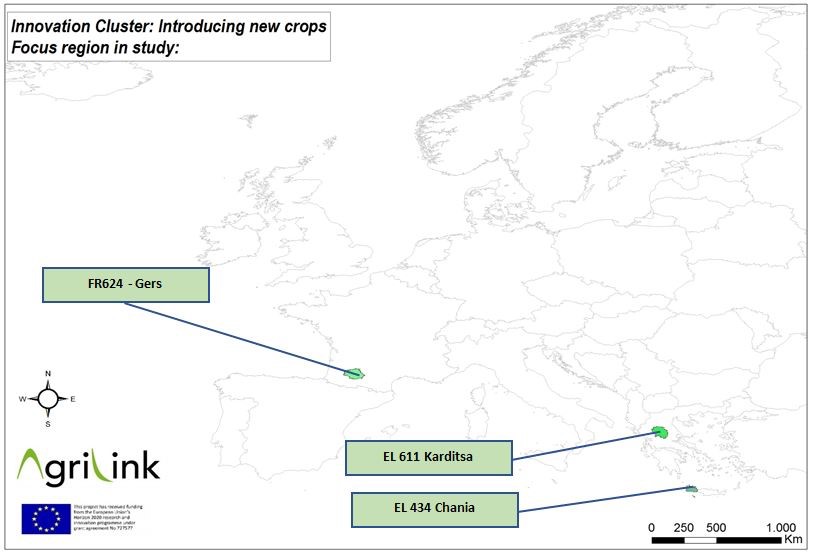
Greece, Chania

Region
Chania is located in Crete, with 1.8% of the national territory and 1.7% of the country’s total agricultural land. Its economy is dependent on the agricultural sector and services, notably tourism and trade. Tree crops cover almost 85% of the farmland, with olive trees corresponding to 90% and citrus to 7% of the total agricultural covered by tree crops.
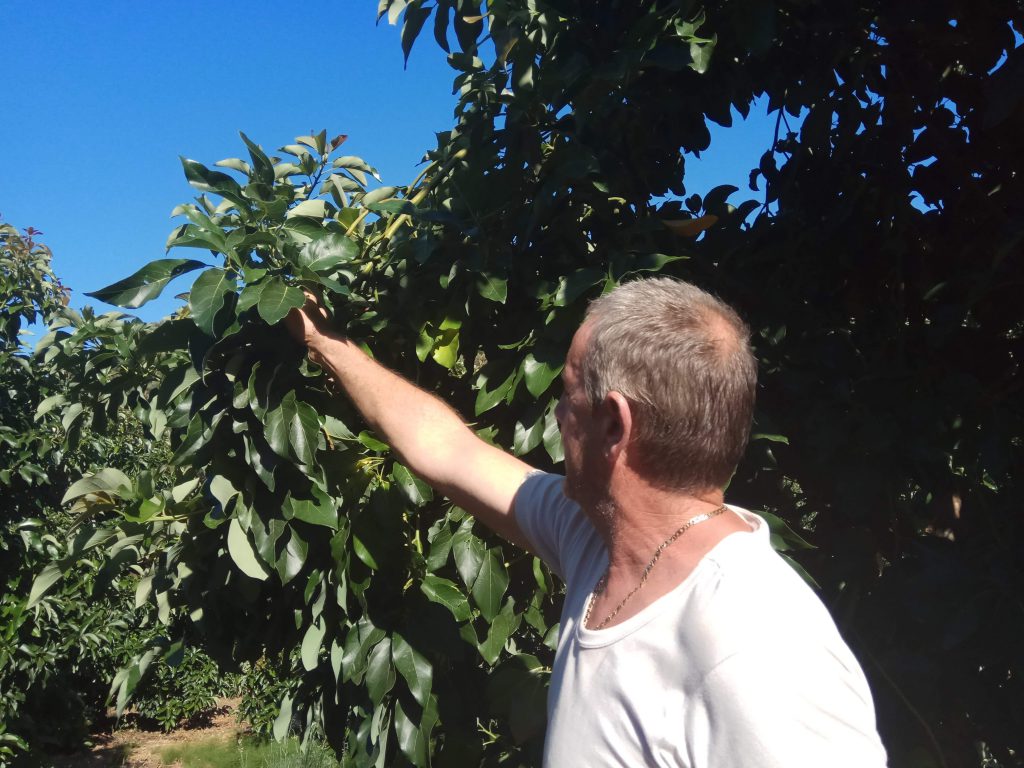
The cultivation of avocado covers only a small area (not exceeding 1.3% of the total land cultivated with tree crops), but in recent years has expanded dramatically, even in marginal areas. The rapid expansion of avocado production, combined with the local challenges of climate change and its increasing financial importance globally, made the exploration of this innovation interesting and worthwhile.
Study focus
The study focused on the role of local AKIS actors and the interactions developed among avocado growers aimed at the exchange of information and knowledge throughout the innovation process. The advisory system in Chania is formed by a few public and farmer-based organisations but mainly by many nurseries and input supply shops (private agronomists).
Research institutes initially raised farmers’ awareness of avocados’ potential in the region. They were crucial during farmers’ assessment of the innovation when they sought guidance and reliable information to support their decision-making. The influence of the local input suppliers as advice providers increased after farmers started to grow the avocados, indicating a return of the farmers to their previous dependency upon them.
Several avocado growers connected directly with the available advice suppliers, but many others relied (sometimes exclusively) on peer-to-peer interactions with other growers. The main activity of the key advice suppliers was their engagement in an informal working group. However, this activity has not produced tangible results for avocado growers due to the lack of official support. Common perceptions about farming, personal preferences, friendships, family bonds, and traditions play an important role in the relationships between farmers and advisors in Chania.
Altogether, the study reveals a gap in the production and adaptation of relevant knowledge a fact that, on many occasions, led avocado growers to repeated crop failures due to inappropriate propagation material and incorrect cultivation practices. The advice providers were not always able to provide proper answers to growers’ questions and the seminars that were sporadically organised by public entities were not enough to guide the growers to solutions to cultivation problems.
The full report (in English) is here – Part 1 and Part 2.
Partner and responsible person contact

Agricultural University of Athens
Alex Koutsouris, koutsouris@aua.gr
Lessons learned
- The advisory landscape in Chania is fragmented with various actors trying to support avocado growers and enhance relevant knowledge, albeit with mixed results. The state authorities have not consistently supported a strategy for the increased avocado production. Public research organisations have been unable to produce or adapt reliable knowledge tailored to the local needs. Individual advisors and the farmers themselves supported each other through their social networks, motivated by the need to survive. Such interactions have not been enough to change the advisory landscape significantly. This systematic failure is reflected in many first adopters abandoning avocado cultivation, only to return to it when they were ‘forced’ by the worsening conditions in the orange and olive oil markets.
- Many advice suppliers (including researchers, authorities and traders) have come to recognise farmers as valuable sources of knowledge. On the one hand, this provides a baseline for co-creating further knowledge through future multi-actor projects and networks. On the other hand, it presupposes a) farmers’ engagement in lifelong training activities to improve their skills and b) the increasing ability of advisors to facilitate the interactions and the flow of knowledge among the involved actors.