


Evolution of Integrated Pest Management (IPM) techniques and the associated regional advisory service
Navarra, Spain

Region
Navarra is located in the north of Spain bordering with France. It is a small region with many different types of agricultural production. Cattle and sheep for meat and milk predominate in the north, whilst intensive horticulture linked to the agri-food industry is important in the south.
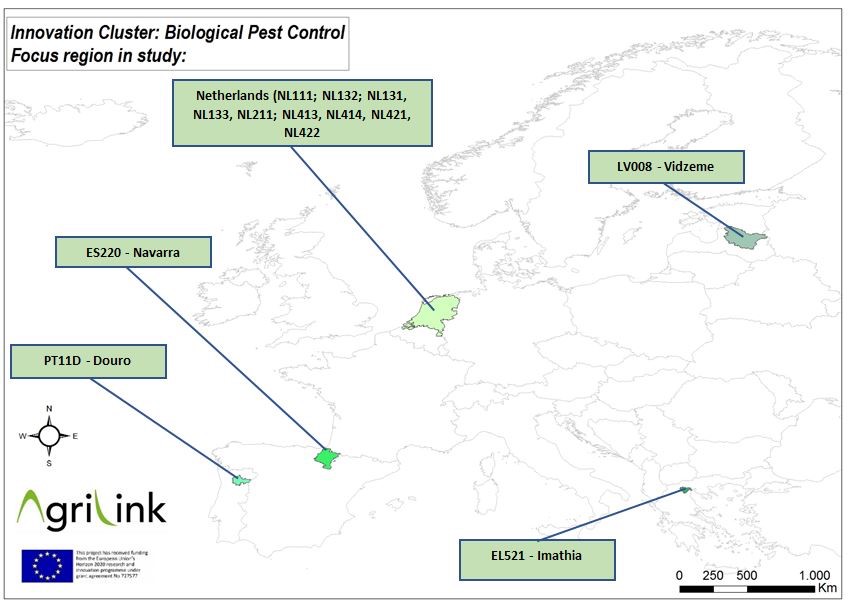
Study focus
Historically, the application of Integrated Pest Management (IPM) techniques in Navarra has been based on the use of preventive measures triggered by a Pest Monitoring and Warning System with technical support from the publicly funded regional advisory service (INTIA) providing relevant knowledge to farmers. Other IPM techniques such as biological control and the use of pheromones have been mainly used in greenhouses and vineyards by organic farmers and those who were more concerned about environmental and health issues.
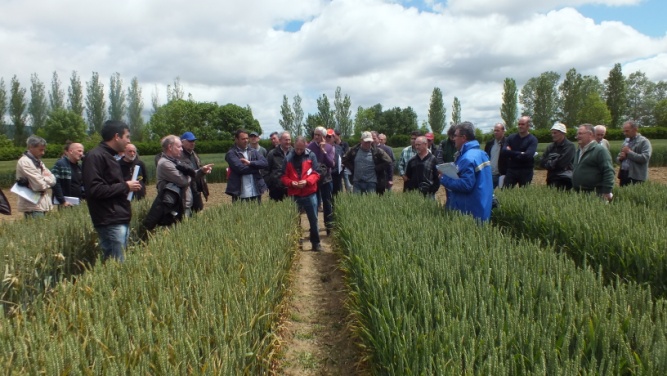
However, in recent years, farmers have become interested to apply IPM techniques in other crops due to the introduction of new EU regulations, changing consumer demands and the reduced availability of conventional chemical plant protection products.
At the same time the range of organisations and businesses providing advice to farmers on the innovative use of IPM techniques has also become more diverse. Surveys carried out in the region showed that farmers engage with a wide range of sources of information and advice (public and private advisors, industries, cooperatives, the Internet, etc.), plus other farmers’ opinion and experience are considered crucial when deciding to implement the innovation.
The decision not to adopt IPM techniques is driven by several factors, including a) the perception that these techniques are technically more complex and more expensive; b) a lack of market demand for crops grown using IPM techniques, and/or; c) because of concerns about reduced crop productivity. Interestingly only a few farmers were found to abandon innovative IPM techniques after adopting and implementing them.
The full report (in English) is here:
Partner and contact person

INTIA
Noelia Telletxea, ntelletxea@intiasa.es
Lessons learned
- There is a growing interest in Navarra in innovations based on the use of alternative methods that reduce the use of plant protection products and improve biodiversity by mitigating the negative environmental impact of conventional crop protection methods.
- Farmers in the region use a wide range of sources of knowledge and advice to collect information on IPM techniques (public advice, product suppliers, agribusiness, cooperatives etc.). Most have a trusted advisor who visits the farm regularly, provides solutions to their problems, and who plays an important role in promoting innovations to them. However, this advisor is not the only influence on a farmers’ decision to adopt an innovation or not. Other actors also influence the decision-making process.
- Farmers interviewed in the case study highlighted the importance of training farm advisors about alternative IPM techniques so that they can promote their use of these techniques among their farmers through continuous training, demonstrating the technical and economic feasibility of the techniques in farmers’ plots and exchanging experiences and good practices.