


The role of advisory services in farmers’ decision making about innovation in direct marketing
Italy, Friuli Venezia Giulia

Region
The Friuli Venezia Giulia region in Udine is a small and diverse area in which the agricultural sector is very advanced for certain sectors (viticulture), while other sectors (notably arable) suffer from structural limitations and a lack of organised processing.
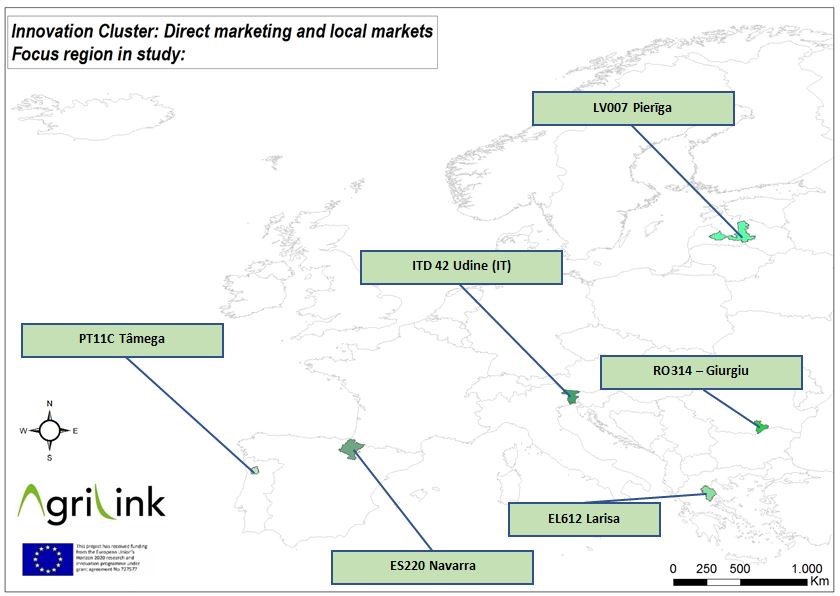
Due to the limited number of young farmers, the region tends to have a conservative mindset that influences the development of local farm businesses. The typical farm is small to medium scale with around 10 hectares, although larger and more innovative farms are increasingly common. Interest in social innovation and new forms of marketing is therefore growing.
Study focus
A collective marketing scheme was selected for study. The scheme aimed to balance a) the needs of farmers looking for better placement of their organic products through direct contact with consumers and b) the growing demand from consumers for building a relationship with the farmers who supply their food. The scheme also aimed to facilitate better logistics that enable a more constant supply of local products.
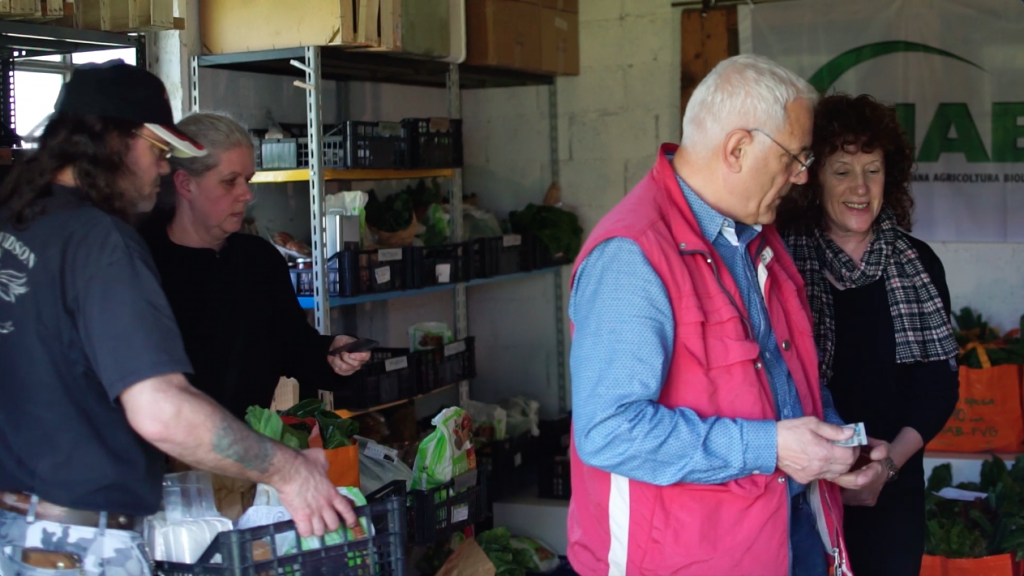
Access to independent and affordable advisory systems for small diversified organic farms in the Friuli Venezia Giulia region (Italy) is very limited. One of the few organisations that have tried to close this gap is the regional branch of AIAB (Italian Association for Organic Agriculture). It has done this by developing a network offering continuous support to farmers through peer-to-peer interaction
AIAB established a system for collective direct marketing of local organic products. This pioneering social innovation drew knowledge and resources from farmers and other organisation members whilst using non-agricultural actors for legal and fiscal advice. Farms in the region have thereby been helped to build a solid customer base whilst creating a community that feels jointly responsible for the sustainability of the local food systems.
The collective scheme involves 45 farmers and relies on an online platform for gathering orders and four product distribution locations. The scheme aims to facilitate farmers’ access to the market and contributes to strengthening the network of farmers which, consequently, amplifies the effects of the peer-to-peer support system. This highlights the importance of social innovations in supporting peer-to-peer networks, especially where an independent advisory system is lacking.
The full report (in English) is here
Partner and responsible person contact

VINIDEA SRL
Davide Zimolo, info@aiab.fvg.it
Lessons learned
- The key success factor identified this case study was the hands-on role of AIAB-FVG (the advisor) in the organisation of the direct marketing innovation. This allowed advice always to be practical and direct, which farmers appreciated very much. Moreover, because the innovation’s success depended on positive cooperation between the farmers (the advised) and AIAB-FVG (the advisor), the environment in which information was exchanged was inherently supportive.
- Although peer to peer exchange of information is very common in the agricultural world, the way that pioneer farmers advised new adopters about this innovation was surprising. Pioneers were not only passing on their own experience to newcomers, but they also adopted a role of active advice, guiding fellow farmers in the process (mainly for the initial steps).
- There were several cases of failure and non-adoption of the innovation. This was observed where farmers could not obtain enough relevant information, either because they were not connected to the peer-to-peer network or AIAB-FVG did not have enough resources to provide advice.
- For this specific innovation in direct marketing, the lack of advisors (or the lack of the ability to find advisors) with expertise in both marketing/business administration and organic agriculture was identified as the main weakness in the local advisory system.