


The role of advisory services in farmers’ decision-making regarding innovations for enhancing ecological infrastructure in vineyards
Douro, Portugal

Region
Douro is a predominantly agricultural region in the Northeast of Portugal with an area of 4,112 km2 split into 19 municipalities. It is a sparsely populated area characterized by a long-term demographic decline (depopulation and ageing) that is typical of many Portuguese rural areas.
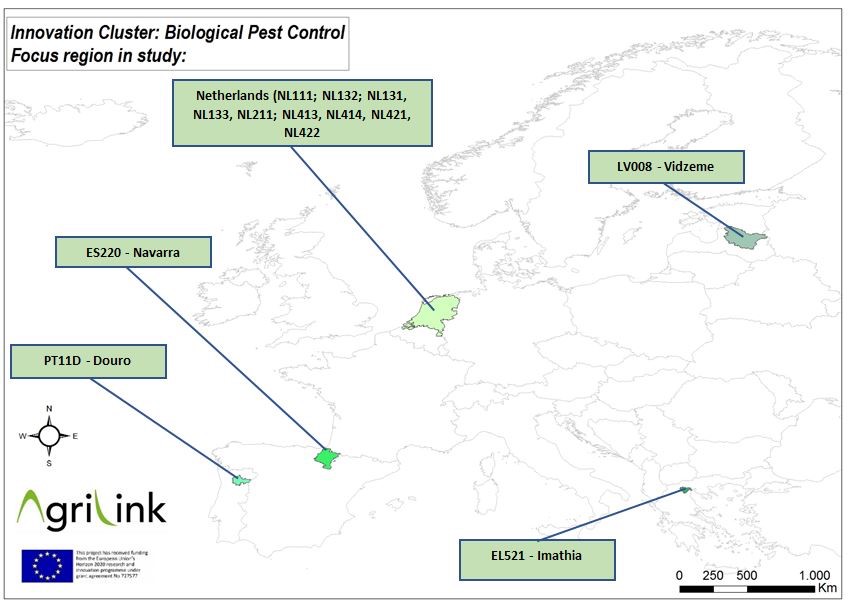
Douro is one of the oldest designated winemaking regions in the world and was established in 1756 to regulate and protect the production and sale of Port wine. The most distinctive feature of the Douro region is the landscape which is dominated by vineyards (supported by handmade stone walls) that are grown on the steep hillsides of the upper Douro river valley. The uniqueness of this human-made landscape, together with the inter-connected history, socio-economy and culture, was acknowledged by UNESCO in 2001 with the designation of World Heritage status. This designation now contributes to the current success of the DOC (Designated Controlled Origin) wines produced in the region and has helped to turn Douro into a worldwide branded wine region and a successful tourism destination.
Study focus
The case study focused on an innovative range of strategies for enhancing the ‘ecological infrastructures’ (EIs) associated with the vineyards. This is an approach introduced originally in the 1990s by pioneering wine growers and which is now steadily becoming more popular amongst the region’s winegrowers. Recent novel EI strategies include the integration of agro-ecological farming practices (e.g. the growing of grassy vegetation in the vineyards and on the sloping terraces) with the re-establishment and enhancement of traditional landscape features (e.g. hedgerows, stone walls, old vines, patches of olive groves and other indigenous Mediterranean vegetation).
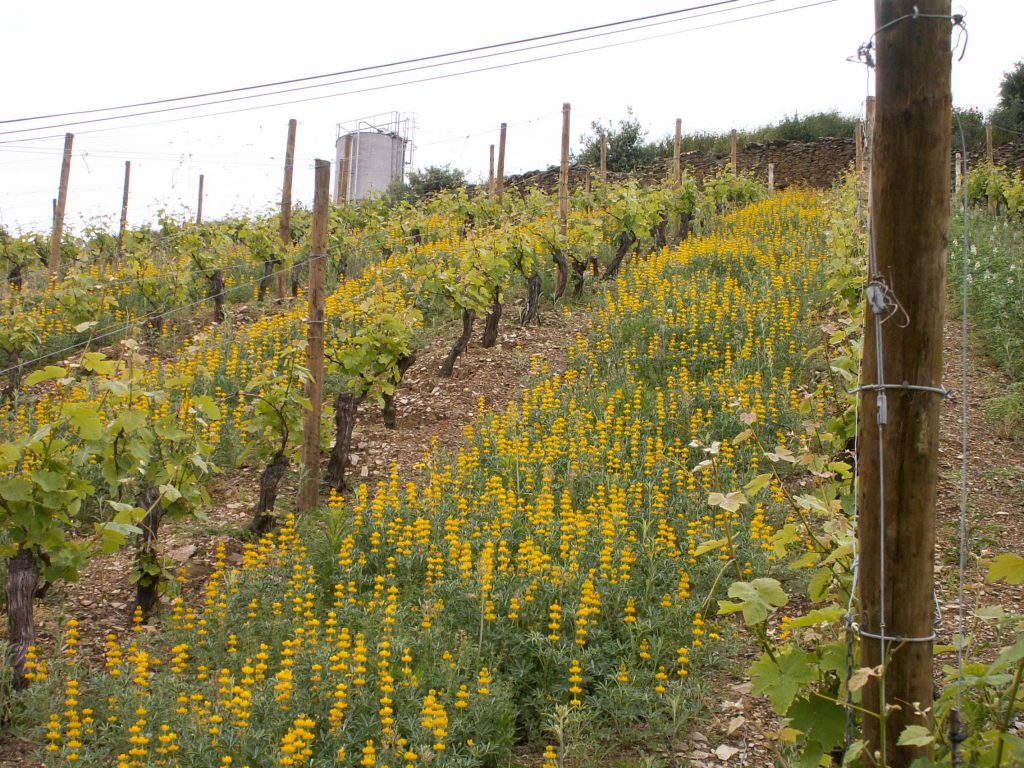
The traditional mosaic landscape of the upper Douro valley wine region is steadily being recovered, partially due to the enforcement of rules protecting the landscape, but mainly to the winegrowers’ rediscovery of the ecological and marketing benefits of “re-naturalizing” the vineyards. However, this is a long-term process. EI strategies are largely unique to each farm and demand long-term investment in-field experimentation and monitoring activities. In order to be successful, winegrowers have to integrate new scientific knowledge into their tacit local knowledge in a continuous process of learning-by-doing.
This case study highlighted the role of an innovative farmer-based organization founded by a leading group of winegrowers in 1982 to help themselves and the DOC Douro face the challenges caused by growing competition in the global wine markets from the increasing number of producers from New World Countries. This FBO was created both to empower winegrowers and to enable them to anticipate and respond to global market trends. To accomplish this, they invested in developing strong ‘back-office’ competences and skills involving intense networking with research institutions and worldwide experts. This was enabled by well-qualified advisors that were engaged directly in research and innovation activities and skilled in the co-creation of new knowledge with researchers and winegrowers.
The full report (in English) is here:
Partner and contact person

University of Trás-os-Montes e Alto Douro (UTAD)
Lívia Madureira, lmadurei@utad.pt
Lessons learned
- The enhancement of the ‘ecological infrastructures’ (EIs) in the Douro vineyards was both leveraged and implemented by a local ‘knowledge and innovation system’ built on an informal triple partnership that joined winegrowers, researchers and advisors. Peer-to-peer informal networks comprising farm managers, wine growers and wine makers have then played a key role in consolidating and anchoring this knowledge and innovation in the region through a process of practical learning-by-doing.
- EU agri-environmental policy has encouraged advisory support to integrated pest management (IPM) in Portuguese vineyards since the 1990s and was a key driver for the uptake of innovations for enhancing the EIs in the Douro vineyards. Policy support for advisors allowed the knowledge and experience on EIs learnt from farmers and researchers to accumulate and be better communicated by advisors – many of whom were graduated from UTAD.
- Research and innovation projects involving many different actors, including farmers, researchers and advisors, played a key role in the dissemination of the EI innovations in the Douro region. The availability of funding for these projects had an important impact on the development of innovations for the enhancement of EIs in the Douro vineyards.