


The role of advisory services in farmers’ decision making for the uptake of innovation in crop diversification
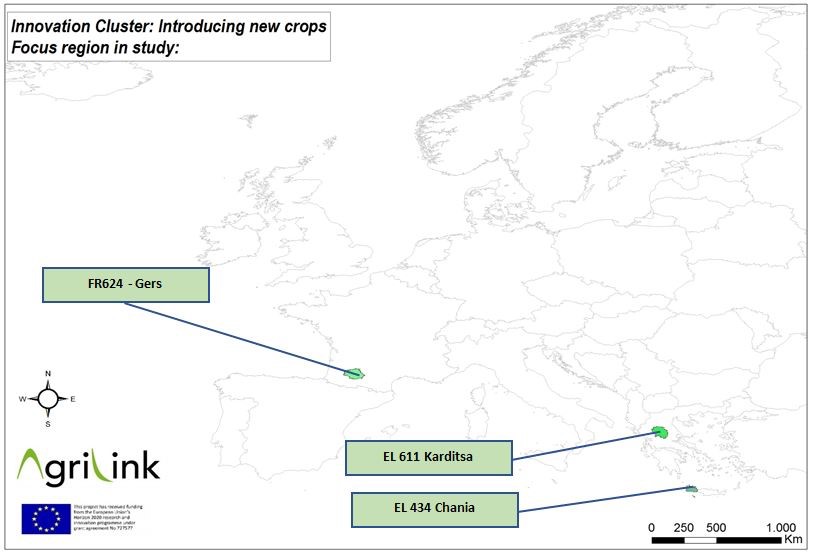
France, Gers

Region
Gers is a very rural agricultural county (NUTS3) in the south-west of France. Agriculture provides 12% of local employment and it is one of the most important regions for crop production in the country. Since the early 2000s, the number of farms has declined by nearly 20%, whilst the average farm size has increased sharply to 86.5 hectares (well above the national average).
Agricultural diversification is important for both production and marketing. Some farms have access to numerous export markets, while others (1 out of 6 farms, especially in viticulture) sell their produce directly to consumers. In addition, 1 out of 3 farms has an official quality label. Organic farming is particularly developed, covering 13% of the county’s Utilised Agricultural Area (UAA).
Study focus
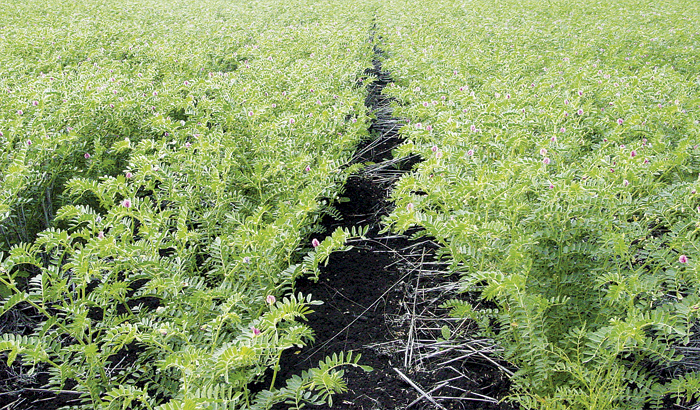
The study focuses on a marketing innovation involving the diversification of crop production with chickpeas. Chickpeas are an annual legume and are increasingly considered central to achieving more sustainable crop rotations in the region. Benefits are expected in terms of both agronomy (legumes can contribute to the reduction of nitrate fertilisation, greenhouse gas emissions and risks of plant diseases, and to soil improvement, etc.) and human health (as they provide vegetal amino acids, they can contribute to reducing diabetes and cardiovascular diseases).
Advisory services are faced with a dual challenge when promoting the growth of chickpeas in rotation. They need to fill a knowledge gap (there is a lack of technical and economic references about chickpea production) and an organisational gap (there is not yet a supply chain dedicated to chickpeas). This study aimed to understand better the role that various organisations have played in farmers’ decisions to adopt chickpeas or not. The study is also informative regarding changes or strengthening of the balance of power, competition or collaboration between suppliers of advisory services.
The full report (in English) is here
Partner and responsible person contact

National Research Institute for Agriculture, Food and Environment (INRAE)
Pierre Labarthe, pierre.labarthe@inrae.fr
Lessons learned
- In the case of chickpea production, advisory services have been taken over by traders, especially farmers’ cooperatives. This advice has been integrated into the commercial contracts for buying the chickpeas, together with other supply and trade services. These packages of services offered to farmers strengthen the position of the cooperatives compared to other advisory organisations in the region, such as the Chamber of Agriculture.
- Two types of micro-AKIS stand out in the region depending on the commercial strategies of farmers and their relationship with upstream and downstream actors. Some farmers are members of a trade cooperative to which they sell their chickpeas. Others belong to a service cooperative and have a storage capacity for the chickpeas on their farm. Those farmers storing chickpeas have more complex needs and tend to have a more diversified micro-AKIS, including neighbours, cooperative advisors, and local discussion groups.